Wednesday, September 30, 2015

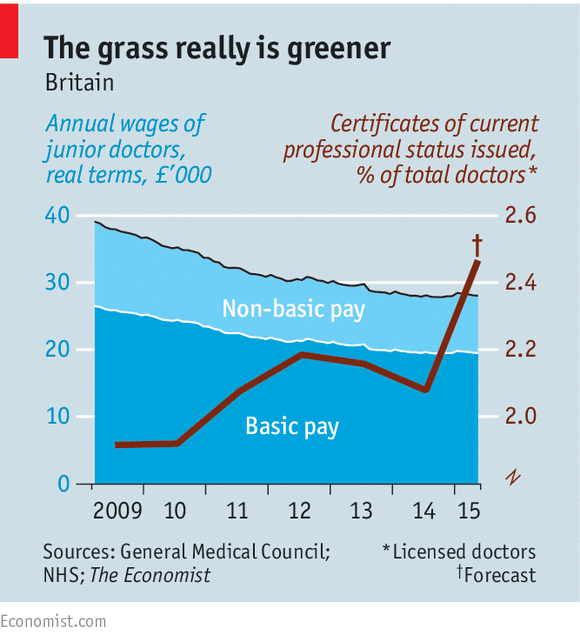
Doctors Leaving The UK

The Economist discusses the growing problem of unhappy UK physicians, "Some junior doctors consider a strike, while others pack their bags".

One possible "canary in the coal mine" indicator:
Like workers in any public service, doctors always say that morale has never been lower. But this time many are threatening to vote with their feet and practise overseas. Normally the General Medical Council, which regulates the profession, gets 20-25 requests a day for certificates of professional status, which make it easier to work abroad. From September 16th-18th it received a staggering 1,644 requests.


Monday, September 28, 2015

Hsieh Forbes Column on Bad Science Reporting

My latest Forbes piece is now out: "How To Protect Yourself Against Bad Science Reporting".

I discuss some sources of error and bias that lead to bad science reporting, including:
1) Many publicly reported science results are still provisional
2) Beware of sloppy statistics
3) Beware of the bias towards positive dramatic results
This latest piece is relatively non-political. But it is uncompromisingly pro-bacon.

For more details, read the full text of "How To Protect Yourself Against Bad Science Reporting".


Thursday, September 24, 2015

Preventing Medical Errors

Medical errors will happen. As Arlene Weintraub notes in Forbes, "Doctors Are Screwing Up Diagnoses -- And Patients Should Speak Out".

An excerpt:
The authors of the IOM report identify several possible methods for encouraging patients to get more involved in their diagnoses. First, they suggest that the act of diagnosis should no longer be treated as a solitary task that takes place mostly inside a single clinician’s brain—but rather as a team effort that includes patients and their families. To achieve that, the authors admit, the entire culture of the healthcare system needs to change to one that welcomes patient feedback...
I personally think that patient should obtain their own personal copies any important medical records (including radiology studies on CT, pathology reports, etc.) in case they wish to review them at home or in consultation with an independent physician.

And overall, patients should treat physicians as advisors -- but not infallible authorities.

Tuesday, September 22, 2015

Adalja on Pyrimethamine and The Market

Dr. Amesh Adalja discusses "Pyrimethamine and the Market".  An excerpt:
While I have no understanding of how the new price was determined, it will eventually have to withstand the scrutiny of the market. If the price is set higher than the market will bear, because it is no longer under patent, other manufacturers will enter the market lowering prices. Ideally this would happen near instantaneously but, because of legislative barriers to entry, which include a multi-step approval process, it will take some time. Better alternatives to the current regimen may also appear in time as well.

Overall, however, infectious disease products have become less attractive to pharmaceutical companies and this, at root, is why we are left with just one manufacturer for many important non-patented products. The disincentives to enter this market are myriad and the ultimate answer to this scenario is not more intervention but to remove artificial barriers to entry, inviting the appearance of competitors in the market...

Monday, September 21, 2015

Speed Bumps And Appendicitis

From the British Medical Journal, "Pain over speed bumps in diagnosis of acute appendicitis: diagnostic accuracy study":
Our results confirm that an increase in pain while travelling over speed bumps is associated with an increased likelihood of acute appendicitis. Absence of pain over speed bumps is associated with a significantly decreased likelihood of appendicitis. Although the specificity was relatively low, as a diagnostic variable pain over speed bumps compared favourably with other features commonly used in diagnostic assessment, with a better sensitivity and negative likelihood ratio than all other features assessed.

Moreover, some patients who were “speed bump positive” but did not have appendicitis had other important abdominal diagnoses, such as a ruptured ovarian cyst, diverticulitis, or pelvic inflammatory disease...
And some comparison data with other clinical signs (Table 2 in the article, click on image to see full-sized version):


Which indicates how poor a clinical exam is for diagnosing appendicitis.  And why the CT scanner has made such an important difference.  (BMJ link via Slate.)

Wednesday, September 16, 2015

More Anti-MOC Backlash

Kurt Eichenwald at Newsweek has an update: "To the Barricades! The Doctor’s Revolt Against ABIM is Underway".

He discusses the growing backlash against the "Maintenance of Certification" (MOC) requirements by the American Board of Internal Medicine (ABIM). In theory, a private agency that certifies that doctors are keeping up on important clinical knowledge is good. But his series of articles on the ABIM's process shows serious problem with the specific methods chosen.

From the article:
Dr. Jones can’t manage his practice, care for his family and study for the certification exams administered by the American Board of Internal Medicine. The tests purportedly insure doctors’ competence, but, like many physicians, Dr. Jones says the questions often have nothing to with what he sees in his practice and are little more than a game of medical Trivial Pursuit. Dr. Jones can’t afford the thousands of dollars for study guides and classes to learn obscure, often irrelevant information, and has no time to review the material every night for months. He failed the test, so his hospital will no longer allow him to admit patients because he couldn’t answer questions about diseases he will never encounter....

This medical protection racket has made millionaires of ABIM top officers, financed a ritzy condominium, limousines and first-class travel, all while sucking huge sums of cash out of the health care system. But now, after decades of unchecked rule by ABIM, cracks are appearing in the organization’s facade of power. Thousands of doctors began a widespread revolt months ago and, in the last few weeks, evidence that their efforts are succeeding has started rolling in...

[A recent study in the Annals of Internal Medicine] concluded that internists incur an average of $23,607 in MOC costs over 10 years—with doctors who specialize in cancers and blood diseases out $40,495. All told, the study concluded, MOC will suck $5.7 billion out of the health care system over 10 years, including $5.1 billion in time costs (resulting from 32.7 million physician-hours spent on MOC) and $561 million in testing costs. And remember—all that time and expense is for a program that has not been proven to accomplish anything.
The article also describes how other specialties (such as the anesthesiologists certification board) are adopting other methods to ensure physician quality through tests and quizzes that are more relevant to clinical practice.

Let's hope the ABIM learns from their example.

And kudos to Kurt Eichenwald for continuing to report on this developing issue.

(Link via Dr. Megan Edison and Dr. Matthew Bowdish.)


Thursday, September 10, 2015

Quick Links: Anti-MOC Backlash, Google, Apple

The Washington Post reports how anti-MOC (Maintenance of Certification) forces are gaining momentum, "Doctors' group will scrap 10-year re-certification exam":
The professional group that represents anesthesiologists will become the first medical board to scrap a widely criticized test that most physicians take every 10 years to demonstrate that they are up to date in their specialties, officials said Wednesday.
(For more background on the MOC controversy, see these earlier Newsweek pieces "The Ugly Civil War in American Medicine" and "A Certified Medical Controversy".)

Time magazine discusses the new Google health initiative in "Here's What 6 Doctors Really Think of Dr. Google". Personally, I think this will a tremendous value for patients and doctors in the long run.

The new Apple iPad Pro could help physicians better communicate important anatomy concepts to patients.  The discussion of medical applications starts at 42:00 in this video.  (Link via Ari Armstrong.)


Tuesday, September 1, 2015

Market for "Perfect Poop"

From CNN: "One man's poop is another's medicine".

Donors who qualify can earn $40 per sample of "perfect poop", to be used for fecal transplantation to treat patients with C. difficile infection:
To donate, Eric had to pass a 109-point clinical assessment. There is a laundry list of factors that would disqualify a donor: obesity, illicit drug use, antibiotic use, travel to regions with high risk of contracting diseases, even recent tattoos. His stools and blood also had to clear a battery of laboratory screenings to make sure he didn't have any infections. 

After all that screening, only 3% of prospective donors are healthy enough to give. "I had no idea," he says about his poop. "It turns out that it's fairly close to perfect."

And that, unlike most people's poop, makes Eric's worth money. OpenBiome pays its 22 active donors $40 per sample. They're encouraged to donate often, every day if they can. Eric has earned about $1,000.
Prospective donors are told, "It's easier to get into MIT and Harvard than it is to get enrolled as one of our donors."

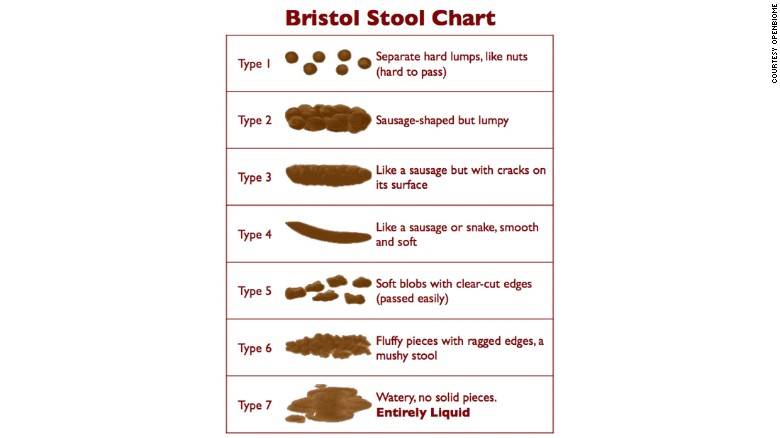
The poop also has to have the acceptable texture, either types 3, 4, or 5, on the Bristol Stool Chart:

Monday, August 31, 2015

Hsieh Forbes Column: The Positive Value of Negative Drug Trials

My latest Forbes piece is now out: "The Positive Value of Negative Drug Trials".

I discuss the unfortunate bias against publishing "negative" scientific results that show a drug doesn't have much clinical benefit, and why it's in the self-interest of drug companies to still report these.

In particular, I highlighted two interesting facts:
1) Most drug trial results are still not being reported to a central registry.

2) Negative results funded by private industry (e.g., pharmaceutical companies) are more likely to be reported than from government-funded research.
Fortunately, free market incentives are driving more drug companies towards full disclosure of both positive and negative study results -- which will benefit patients.

For more details, read the full text of "The Positive Value of Negative Drug Trials".


("Fluoxetine 20 mg capsules" by Tom Varco - Own work. Licensed under CC BY-SA 3.0 via Commons; source: Wikipedia.)

Monday, August 24, 2015

New Push To Regulate Personal Trainers

An interesting (but not very surprising) consequence of ObamaCare -- a new push to regulate personal trainers. This is gaining traction in the District of Columbia, but expected to spread soon to all 50 states as well.

From the 8/23/2015 Washington Post article, "In the nation’s capital, a new business to regulate: D.C.’s personal trainers":
The new regulations, being written by and for the nation’s capital city, will create a registry of all personal trainers in the District only. But they are expected to become a model that winners and losers in the fight believe will be replicated elsewhere.

The credit — or blame — for the newfound urgency can be traced in part to President Obama’s Affordable Care Act. A variety of workplace wellness programs and preventive health-care initiatives called for in the law could soon translate into rivers of billable hours for those with credentials to keep American waistlines in check.

And that means the race is on to be eligible for those credentials, which could eventually lead to the ability to bill insurance companies for services, much like such professionals as dieticians and physical therapists. With billions of dollars potentially at stake, lawyers and lobbyists are engaged in a no-holds-barred fight to shape the nation’s first-ever rules over who has the right to tell someone else how to exercise.
Personally, I find the idea of an agency deciding "who has the right to tell someone how to exercise" to be deeply disturbing.

The article also discusses some of the controversy within the CrossFit community. (I don't do CrossFit, but this part might be interesting to my friends who do.)

Friday, August 21, 2015

Dinosaurs Are Dangerous!

Today's not-an-Onion story, "The day I removed a toy dinosaur from a woman's vagina".

There are very few jobs in which one gets paid to say things like, "I don’t advise inserting children’s toys during sexual activity, however if you do choose to masturbate with a toy dinosaur, I recommend buying your own, and perhaps putting it in a condom, or tying a leash to its foot."


Wednesday, August 19, 2015

"Never Events" and Unintended Consequences

Doctors (like all people) respond to incentives. Here's one "unintended consequence" of the policy of "never events", as explained by orthopedic surgeon Dr. Thomas Guastavina:

"The sad story of how “never events” prevent obese patients from getting new hips"

Monday, August 17, 2015

Uber For Health Care

WSJ: "Startups Vie to Build an Uber for Health Care".

There are some interesting business models in play:
Heal is one of several startups putting a high-tech spin on old-fashioned house calls—or “in-person visits,” since they can take place anywhere. The services provide a range of nonemergency medical care—from giving flu shots to treating strep throats and stitching lacerations—much like a mobile urgent-care clinic.

The companies use slightly different models. Pager, in New York City, dispatches doctors or nurse practitioners via Uber, for $200. Heal, in Los Angeles, San Francisco and Orange County, Calif., promises to “get a doctor to your sofa in under an hour” for $99. (A medical assistant goes along to do the driving and parking.)

RetraceHealth, in Minneapolis, has a nurse practitioner consult with patients via video (for $50), and only comes to their homes if hands-on care like a throat swab or blood draw is necessary (for $150)...

Most of the services don’t accept insurance, but they say patients can pay with health savings accounts or submit out-of-network claims. 
The article also notes that for some customers, it's cheaper to pay for this at-home service than to take time off from work to go to the doctor's office.

It's also a win-win for participating doctors:
Such ventures are fueled by a confluence of trends, including growing interest in the so-called sharing economy, where technology connects providers with excess capacity and consumers who want on-demand services. Many doctors and nurses who work for hospitals are eager for extra work in their off-hours, the companies say. The services carry malpractice insurance, but say overall low overhead keeps prices down.

And thanks to the boom in mobile-medical technology, providers can carry key equipment with them, from portable blood analyzers to hand-held ultrasounds.
I just hope the government doesn't impose onerous regulatory burdens on this growing sector.


Tuesday, August 11, 2015

Catron Takes Down Trump On Health Care

In his latest American Spectator piece, David Catron does a thorough take-down of Donald Trump on health care policy: "Trump Is No Friend of Free Market Health Care".

Here is the opening:
Most of Donald Trump’s public statements include the rote declaration that Obamacare is a disaster. This is true, of course, but it doesn’t tell us anything new. It’s only when he starts elaborating on his objections that one gets a sense of what he believes, and he doesn’t talk like a friend of the free market. During last week’s Republican debate, for example, he was asked about his past praise of single-payer health care and replied, “As far as single-payer, it works in Canada, works incredibly well in Scotland.” This answer was both antithetical to free-market thinking and profoundly ignorant...

For more details, read the full text of  "Trump Is No Friend of Free Market Health Care".

Monday, August 10, 2015

Hsieh Forbes Column: Free Speech 1, FDA 0

My latest Forbes column is now out: "Free Speech 1, FDA 0".

I discuss a breaking update to my earlier Forbes piece on drug company Amarin's fight to engage in free speech in the form of off-label marketing of one of its products.

Basically, Amarin wanted to give truthful medical information to doctors which would allow them to more effectively use one of their drugs in a way that was legal, but not FDA-approved. The FDA forbade Amarin from engaging in such speech, and Amarin sued the FDA.

This past Friday, Amarin won an important legal victory in federal court. Judge Paul Engelmayer came down firmly on the side of free speech.

For more details see the full text of, "Free Speech 1, FDA 0".

(Earlier Forbes piece, "Drug Company Amarin Stands Up For Free Speech Against FDA", 5/8/2015.)

Update: Related commentary from Alex Tabarrok, "FDA Loses Another Free Speech Case"

Monday, August 3, 2015

UK Health Coverage

From EP Monthly:

"Man in Great Britain mugged, had his bicycle stolen, and had his leg broken in the process. He called emergency services, but was told that his injury 'wasn’t serious enough' to send an ambulance. Three police officers gave him a ride home where he had to book an Uber ride to get him to the hospital. Good thing he had medical 'insurance,' though."

Wednesday, July 29, 2015

Hsieh Forbes Column: Genuine Charity Requires Freedom

My latest Forbes column is now up: "Genuine Charity Requires Freedom".

I discuss the case of the amazingly generous man James Harrison, whose voluntary charity has helped save the lives of 2 million Australian babies. In Harrison's case, he literally gave of himself to help others in the form of over 1,100 voluntary blood donations.

I then discuss the nature of charity, why it requires freedom, and how compulsory "giving" destroy the morality of charity.

For more details, read the full text of "Genuine Charity Requires Freedom".


Tuesday, July 28, 2015

Hsieh PJM Column: "In Praise Of The Market Economy"

PJ Media has posted my latest short column, "In Praise of the Market Economy".

One of my take-home points is that the prosperity created by the modern market economy creates both material and spiritual freedom unimaginable to our ancestors of 200 years ago.

Friday, July 24, 2015

Unintended Consequences Of Grading Doctors

Dr. Sandeep Jauhar has a nice piece in the 7/22/2015 New York Times, "Giving Doctors Grades".

He discusses some of the negative unintended consequences of "report cards" that supposedly rate a surgeon's quality based on patient mortality and complication outcome data.  In essence, they discouraged surgeons from taking on the tougher cases and instead created a perverse incentive for them to "cherry pick" only the healthiest patients.

He cited experience from New York state, which has used such report cards since the 1990s:
They often penalized surgeons, like the senior surgeon at my hospital, who were aggressive about treating very sick patients and thus incurred higher mortality rates. When the statistics were publicized, some talented surgeons with higher-than-expected mortality statistics lost their operating privileges, while others, whose risk aversion had earned them lower-than-predicted rates, used the report cards to promote their services in advertisements.

This was an insult that the senior surgeon at my hospital could no longer countenance. “The so-called best surgeons are only doing the most straightforward cases,” he said disdainfully. Research since then has largely supported his claim...
And:
Surgical report cards are a classic example of how a well-meaning program in medicine can have unintended consequences. Of course, formulas have been developed to try to adjust for the difficulty of surgical cases and level the playing field. For example, a patient undergoing coronary bypass surgery who has no other significant diseases has an average mortality risk of about 1 percent. If the patient also has severe kidney dysfunction and emphysema, the risk of death increases to 10 percent or more. However, many surgeons believe that such formulas still underestimate surgical risk and do not properly account for intangible factors, such as patient frailty.

The best surgeons tend to operate at teaching hospitals, where the patients are the most challenging, but you wouldn’t know it from mortality statistics. It’s like high school students’ being penalized for taking Advanced Placement courses. College admissions officers are supposed to adjust grade point averages for difficulty of coursework, but as with surgical report cards, the formulas are far from perfect.

The problem is compounded by the small number of operations — no more than 100 per year — that a typical cardiac surgeon performs. Basic statistics tell us that the “true” mortality rate of a surgeon is not what you measure after a small number of operations. The smaller the sample, the greater the deviation from the true average.
It's not that quality metrics are completely useless. But they can be dangerously misleading. And they can create perverse incentives that harm both patients and physicians. (Via H.R.)

Wednesday, July 22, 2015

Dropout Doctors

An interesting new article discusses, "Dropout Docs: Bay Area Doctors Quit Medicine to Work for Digital Health Startups"

One quote from the article:
Tech culture is very appealing when juxtaposed against the hierarchy and myriad hoops to be jumped through in clinical medicine.
Another quote:
Many of the dropout docs expressed a desire to improve the doctor-patient experience. In interviews with KQED, several said they spent very little time administering care during medical school, and they felt that patients were too often kept out of the loop.

A recent study found that doctors-in-training spend an average of just eight minutes with each patient. This is a drastic decrease from previous generations and is linked to more record-keeping requirements and restricted on-duty hours.
If young physicians find entrepreneurship more rewarding than clinical medicine, perhaps those who are setting the rules governing clinical medicine need to re-examine their policies. Until then, med school graduates should pursue whatever careers that they find the most professionally and personally satisfying.