Wednesday, April 8, 2015

More MOC Controversy

Kurt Eichenwald of Newsweek has a new article on the controversy surrounding the American Board of Internal Medicine (ABIM): "A Certified Medical Controversy".

Here's the opening:
My wife is an internist. My brother is a pediatrician at a major academic institution. So was my father. My best friend is a surgeon. I regularly see an internist for my medical care, and I like her very much. I also should mention that this article is an opinion column. 

And it is my opinion that the American Board of Internal Medicine (ABIM) has hidden managerial incompetence for years while its officers showered themselves with cash despite their financial ineptitude and the untold damage they have inflicted on the health care system...
I applaud Eichenwald for asking some hard questions about the ABIM.

See also his earlier related story: "The Ugly Civil War in American Medicine". 

(Via Matthew Bowdish.)

Tuesday, March 31, 2015

Amerling Vs. Ginsburg on Fee For Service

The Wall Street Journal recently published a nice pair of columns on both sides of the issue, "Should the U.S. Move Away From Fee-for-Service Medicine?"

The anti-fee-for-service side was taken by Paul Ginsburg.  The pro-FFS side was taken by Richarad Amerling.

I basically agree with Dr. Amerling and I want to quote a couple of excerpts from his piece:
The real cause is the institution and growth of direct third-party payments. Inflation in health care was trivial until the mid-1960s, when Medicare and Medicaid were thrust into existence. The other big driver is the morphing of health insurance into a prepayment model, where even routine, low-cost care is covered. When neither the consumer nor the provider “feels” the cost of the service offered, it promotes overuse of medical services and high levels of spending. Government data show that 48% of health dollars were “out of pocket” in 1960. By 2008, this was down to 12%...

In other professions that feature fee for service but where third-party payments play a much smaller role, such as in law, dentistry or veterinary medicine, there is little excessive price inflation. Similarly, in areas of medicine outside the third-party-payment system, such as cosmetic surgery, Lasik eye surgery, and direct pay practices, prices have actually declined over time.

It is impossible to eliminate self-interest, which is embedded in human nature. But if some doctors and hospitals over time get away with unnecessary tests or padding bills, it isn’t because of fee for service. It’s because the patients are shielded from the impact by third-party payments.

Fee for service directly aligns payments with care, which is what most patients want, especially when facing serious illness. It’s incentive-based and increases the likelihood of quality care in a timely manner...
But I highly recommend reading both sides of this debate, "Should the U.S. Move Away From Fee-for-Service Medicine?"

Here is the related video.


Monday, March 30, 2015

Hsieh Forbes Column: 18-Year-Olds Should Be Allowed to Smoke

My latest Forbes column discusses the latest debate over raising the legal age for smoking: "Smoking Is Bad, But 18-Year-Olds Should Be Allowed to Smoke".

In particular, any debate on this should include the following three questions:
1) Is it the government’s job to stop legal adults from making unhealthy life choices?

2) Is it right for the government to restrict the freedom of adults over 18, because others under 18 might be more tempted to smoke?

3) Whose body is it, anyways?
People don't always make the best choices for themselves.  But in a free society, they should be able to do so, provided they aren't violating the rights of others.


Wednesday, March 25, 2015

Bad Health Tech

The New York Times recently ran a surprisingly good article, "Why Health Care Tech Is Still So Bad".

From the article:
A friend of mine, a physician in his late 60s, recently described a visit to his primary care doctor. “I had seen him a few years ago and I liked him,” he told me. “But this time was different.” A computer had entered the exam room. “He asks me a question, and as soon as I begin to answer, his head is down in his laptop. Tap-tap-tap-tap-tap. He looks up at me to ask another question. As soon as I speak, again it’s tap-tap-tap-tap.”

“What did you do?” I asked.

“I found another doctor."
The NYT piece correctly describes how mandatory electronic medical records are putting a barrier between patients and physicians, impeding good medical care.

And even some of the intended "safety" features, such as electronic alerts for wrong prescriptions can cause cognitive overload.  If you're faced with thousands of beeps and alerts each month, your brain quickly starts ignoring them.  It's the electronic equivalent of "crying 'wolf'".

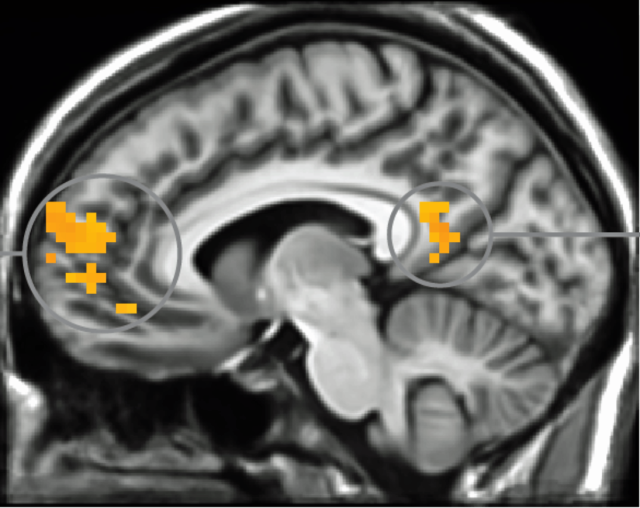
(A related article from the technology field noted how, "MRIs show our brains shutting down when we see security prompts".  I wouldn't be surprised if the same thing happened with physicians coping with never-ending electronic medical record alerts.)

I'm not opposed to technological improvement.  But I am opposed to government mandates ramming technology into hospitals and medical offices based on bureaucrats' preferences, not in response to the genuine needs of physicians.  I love my smartphone --  but I don't think the government should use financial carrots-and-sticks to force everyone to own one.  Nor should the government use financial carrots-and-sticks to force physicians to adopt unwanted (and potentially harmful) electronic medical record systems.

Related stories:
"Can You Trust What's In Your Electronic Medical Record?" (Forbes, 2/24/2014)
"The Eyes of Big Medicine: Electronic Medical Records" (PJ Media, 9/18/2013)

NYT link via Dr. Matthew Bowdish, who also commented:
It breaks my heart whenever a patient tells me that one of the reasons they love our practice is that we look at the patients rather than a computer screen. Little do they know that we already have electronic health records although are holding on full implementation. Not only has the current EHR paradigm almost destroyed our business, it also risks robbing us of our humanity in caring for patients. The promise of technology is huge and necessary. These govt-mandated, tools of Big Insurance are not.


Monday, March 23, 2015

Patients Secretly Recording Doctors

The 3/12/2015 edition of JAMA (Journal of the American Medical Association) discusses "Ethical Implications of Patients and Families Secretly Recording Conversations With Physicians".

I don't think patients should record their physicians without their consent. However, I do strongly favor such recordings when both sides agree, as discussed in my February 2015 Forbes column, "Why You Should Record Your Doctor Visits".

But I also recognize that many states allow such surreptitious recordings with only "one party" (patient) consent.  Hence, I also agree with the JAMA piece that physicians should probably start communicating as if their words were being permanently recorded by the patient.

Tuesday, March 17, 2015

3 Good Things About US Health Care

US health care isn't perfect by any means. But Dr. Suneel Dhand gives us some much-needed perspective in this piece, "You’re lucky to be a patient in America. Here are 3 reasons why."

The three key points include:

1) Getting to see your attending physician every day.

2) Patient empowerment to choose.

3) Putting energy into customer satisfaction and good service in hospitals.

Dr. Dhand discusses each in more detail. For more info, please read the full text of  "You’re lucky to be a patient in America. Here are 3 reasons why."


Friday, March 13, 2015

The Ugly Civil War in American Medicine

The battle over "Maintenance of Certification" (MOC) has finally hit the mainstream press in this informative Newsweek piece, "The Ugly Civil War in American Medicine".

Here is the opening to the article:
Are physicians in the United States getting dumber? That is what one of the most powerful medical boards is suggesting, according to its critics. And, depending on the answer, tens of millions of dollars funneled annually to this non-profit organization are at stake.

The provocative question is a rhetorical weapon in a bizarre war, one that could transform medicine for years. On one side is the American Board of Internal Medicine (ABIM), which certifies that doctors have met nationally recognized standards, and has been advocating for more testing of physicians. On the other side are tens of thousands of internists, cardiologists, anesthesiologists and the like who say the ABIM has forced them to do busywork that serves no purpose other than to fatten the board’s bloated coffers...
For more details, read the rest of "The Ugly Civil War in American Medicine".


Wednesday, March 11, 2015

Proposed Legal Protection For Direct Primary Care in Florida

From Florida, a good idea: "Doctors and nurses could charge patients a set fee and provide services in exchange for that price and not be afoul of the state’s insurance codes under a proposed committee bill unveiled by the House Innovations Subcommittee."

The state of Michigan passed a similar law a couple of months ago.

I hope this idea gains momentum!


Tuesday, March 10, 2015

A Radiologist's Day

As a radiologist, I really appreciated this comic "A Radiologist's Day".  You can click on the image below to see the full-sized version.

(And I bought the t-shirt at CafePress.)

Monday, March 9, 2015

McArdle on Economic Progress and Health Care

Megan McArdle has written a nice piece on economic progress over the past century, "It's Complicated. But Hopeful."

The whole piece is worth reading, as it helps put discussions of economics and standard of living in a good historical context.  But for this post, I wanted to quote from her discussion of how health care has become more "expensive":
In the 1950s, when the president of the United States had a heart attack, he got the absolute state of the art treatment from some of the top doctors in the country: blood thinners, painkillers, and bed rest.

Today, he would have had an array of scans and blood tests to diagnose his problem, and then his physicians would have been able to choose from an array of treatments—stents, coronary bypass, balloon angioplasty—to prevent future heart attacks. And thanks to epidemiology, public health campaigns, and an array of smoking cessation aids, he probably wouldn’t have had a four-pack-a-day cigarette habit, either.

1950s health care isn’t expensive; this same regimen would be a bargain at today’s prices. What’s expensive is things that didn’t exist in 1950. You can say that “health care” has gotten more expensive—or you can say that the declining cost of other things has allowed us to pour a lot more resources into exciting new health products that give us both longer and healthier lives...
For more examples of progress that we don't always fully appreciate, read the full text of "It's Complicated. But Hopeful."


Wednesday, March 4, 2015

Physician Shortage Update

From the Washington Post: "U.S. faces 90,000 doctor shortage by 2025, medical school association warns".

Here is the opening:
The United States faces a shortage of as many as 90,000 physicians by 2025, including a critical need for specialists to treat an aging population that will increasingly live with chronic disease, the association that represents medical schools and teaching hospitals reported Tuesday.

The nation's shortage of primary care physicians has received considerable attention in recent years, but the Association of American Medical Colleges report predicts that the greatest shortfall, on a percentage basis, will be in the demand for surgeons — especially those who treat diseases more common to older people, such as cancer...
The shortage did not originate with ObamaCare, but the ObamaCare health law will make the shortage worse in two ways.  First, there will be an influx of new patients without a corresponding increase in the number of doctors. Second, many doctors are already demoralized by the pressures of the new health law -- and as they retire, we may not see the same caliber of new physicians entering the medical profession.

Some of this shortage can be addressed by having patients see non-physicians (such as nurse practitioners or physician assistants). But although the NPs and PAs can handle many medical issues, they can't completely perform at the level as a full-fledged physician -- nor should we expect them to.

Unfortunately, patients will pay the price in terms of longer waits for care.


Tuesday, March 3, 2015

Catron On King-v.-Burwell

David Catron explains why "King v. Burwell Is Much Bigger Than Obamacare".

Here's the opening to his piece:
The Court will hear oral arguments this Wednesday in King v. Burwell. The petitioners in this case want the justices to rule that the Obama administration must abide by the provisions of PPACA that govern insurance subsidies. The text of that law, better known as Obamacare, requires that all subsidies must flow through exchanges established by the states. But due to the refusal of 36 states to set up such “marketplaces,” the Obama administration cobbled together federal exchanges in those states through which it is now issuing illegal subsidies.

In other words, the President conducts himself in a manner utterly inconsistent with republican principles and his constitutional oath. Obama obviously believes the law is what he says it is, a delusion evidently shared by his party and the press. He behaves as if he possesses the power to unilaterally change laws and create new ones merely because the opposition party actually opposes his agenda. Adams characterized such behavior as that of “a despot, bound by no law or limitation but his own will; it is a stretch of tyranny beyond absolute monarchy.”

This is, at its core, what King v. Burwell is about. It has nothing do with any “plot to kill health care,” as the New York Times recently put it. Nor does it involve a surreptitious conspiracy to reinvigorate the “states’ rights” movement, as it was described last week in Politico. It isn’t even an attack on Obamacare, though a ruling in favor of David M. King and his fellow plaintiffs would obviously have a profound effect on the future of the “reform” law. It is rather an attempt to prevent the President from doing further violence to the Constitution...
Or as he notes, "The Supreme Court is about to decide whether we are a nation of laws or men."

For more, read the full text of "King v. Burwell Is Much Bigger Than Obamacare".

Monday, March 2, 2015

"Right To Try" Proposed In Oregon

Another good step in the right direction:
Diego Morris said he’s alive today because he used experimental drugs to treat his cancer even though they weren’t approved by the FDA.

In 2012, Morris was diagnosed with osteosarcoma. But because the medicine needed to treat it was not approved in the US, he traveled to Europe with his mother to get it.

Now he’s cancer-free and he flew to Oregon to join Rep. Knute Buehler to support the Right To Try bill...
Click through to see related video.

CO passed a similar law in 2014.  (Via Christina Sandefur.)

Tuesday, February 24, 2015

Catron: Still Not Working

David Catron discusses the latest snafus with ObamaCare in his latest AmSpec piece, "No, Mr. President, Obamacare Isn’t Working".

A couple of excerpts:
Last week, the White House took to Twitter for purposes of publicizing its latest Obamacare enrollment blarney. Far more informative than the tweet’s fictitious sign-up numbers was the schmaltzy video to which it was linked. Staged in the Oval Office, this one-act farce features a simpering HHS Secretary briefing our Thespian in Chief, who then delivers the following soliloquy: “The Affordable Care Act is working. It’s working better than we anticipated. It’s certainly working a lot better than many of the critics talked about early on.” In Obama’s 27-word script, “working” appears three times. The President doth protest too much, methinks.
And:
Ask the folks who learned last Friday that Obama’s bureaucrats sent them erroneous tax information relating to PPACA. AP reports, “Officials said the government sent the wrong tax information to about 800,000 HealthCare.gov customers, and they’re asking those affected to delay filing their 2014 returns.” And, as with most government blunders, the price will be paid by those who can least afford it. Robert Pear points out in the New York Times, “[T]housands of lower-income Americans who qualified for subsidized insurance had hoped for tax refunds and now must wait for weeks to file their taxes.”
For more, read the full text of  "No, Mr. President, Obamacare Isn’t Working".

Monday, February 23, 2015

FDA Hindering Promising Therapies Derived From Patient's Own Cells

Interesting update from the Winter 2015 issue of City Journal: "Patient, Heal Thyself".

Their teaser line: "Treatments from our own cells could cure many diseases -- if Washington will only allow it to happen."

They discuss how the current FDA regulatory paradigm stifles this promising research:
Unlike conventional drugs, these cell therapies are created from scratch, one patient at a time, and many of the tools used to create them are simple, compact, and cheap enough to land in laboratories that serve hospitals, small clinics, and doctors in private practice. They have been landing there in growing numbers in the last decade, and Washington has been trying to keep pace.

The Food and Drug Administration (FDA) has taken the position—upheld in February 2014 by a federal appellate court—that a patient’s cells become a “drug” when extracted and manipulated in a laboratory, and may not be used to treat the patient without FDA approval. But it is far from clear how the agency should set about approving a custom-made drug that will be prescribed to only one patient, in whom its safety and efficacy will be largely determined by how the patient’s molecular biology interacts with itself....

[R]igidly scripted trials remain the norm at the FDA. Responding to the advent of drugs precisely designed to modulate specific molecular targets, the FDA has gradually come to accept that the drug-approval process must take into account the relevant patient-side molecular factors as well.

The FDA has, however, been slow to accept trial protocols that systematically investigate those factors and incorporate them into prescription protocols that increase the likelihood that the drug will be effective. With rare exceptions, the agency requires that the molecular factors that might affect a drug’s efficacy be identified by studying the disease before a clinical trial begins, or by analyzing the drug’s performance in short, early-phase trials that involve few patients—far too few to provide a full understanding of how variations in patient chemistry may affect a drug’s performance. This has already been recognized as a serious problem in the testing of certain categories of conventional drugs...
The scientific aspects are fascinating. And the regulatory aspects are infuriating.

For more details on both, see the full text of "Patient, Heal Thyself".

(Link via Instapundit.)


(Image from the article, captioned: "Emily Whitehead, a child given cell therapy for acute leukemia; her family says that she shows no sign of the cancer today. Ed Cunicelli, The Children's Hospital Of Philadelphia/AP photo.")

Saturday, February 21, 2015

BRI Debate at Georgetown

The Benjamin Rush Institute will be sponsoring a debate on 3/27/2015 at Georgetown University School of Medicine:

"Be It Resolved: Affordable, quality healthcare develops from maximizing freedom of choice – not government programs or mandates".

If you're in the Washington DC area, it looks like a great event!

From their announcement page:
When: March 27, 2015 @ 6:00 pm – 8:00 pm
Where: 
Georgetown U. School of Medicine - New Research Building Auditorium
Georgetown University
3900 Reservoir Road Northwest, Washington, DC 20007
USA
Cost:
Free, but RSVPs requested.
Contact:
John Grimsley
Please RSVP through the green “Tickets” link on the announcement page.

The event is free but we want to plan the right amount of food! There is a parking garage located under the Leavey Center accessible from Reservoir Road, or there is the Southwest Parking garage accessible from Canal Road.

Debate Venue Details:

Date: Friday, March 27, 2015

Time: [Eastern]
6:00 PM Reception with soft drinks and hors d’oeuvres; Registration and initial voting
6:30 Debate Begins
7:45 Debate Ends. Final voting, tally.
8:00 Announcement of results.

Place: Georgetown University School of Medicine
Room — New Research Building Auditorium
3900 Reservoir Road Northwest,Washington, DC 20007

Moderator: Michael Ramlet (Morning Consult)

Arguing the Affirmative:
Dr. Josh Umbehr MD (AtlasMD)
Dr. Lee Gross, MD (Epiphany Health, Inc.)

Arguing in Opposition:
Dr. Dennis McIntyre, MD
Dr. Adriane Fugh-Berman, MD

Friday, February 20, 2015

WSJ On Records and Regulators

Two quick links to recent Wall Street Journal pieces worth reading.

Singer: "ObamaCare's Electronic-Records Debacle".

He highlights both the obvious and hidden costs of mandated electronic medical records, and how they harm patients in the real world.

Huber and Howard: ''What Failed, the new Cancer Treatment or Regulators?"

They discuss how rigid FDA testing guidelines hinder the approval of drugs that might work well for one subpopulation of patients, even if they have minimal effect on the general population.  In essence, this means stifling the development of "personalized medicine" and "precision oncology" based on an individual's unique genetic traits.

(As always, if these direct links only show the preview page, you can often read the full text for free by typing the article title into a Google search box, and getting the "Free Day Pass" version of the article.)


Wednesday, February 18, 2015

ICD-10 Costs

From the Daily Signal: "How This New Regulation Will Drive Up Your Health Care Costs".

Our own medical practice is already undergoing ICD-10 training as well as upgrading our business office software.  I don't know how much money it is costing, but it sure is taking a lot of man-hours!

(Via Benjamin Rush Institute.)

Monday, February 16, 2015

Hsieh Forbes Column: Why You Should Record Your Doctor Visits

My latest Forbes piece is now out: "Why You Should Record Your Doctor Visits".

Here is the opening:
NBC's Brian Williams has gone from being a respected news anchor to the butt of Internet jokes after he recanted a false story about being shot down in a helicopter over Iraq. As a result of the subsequent controversy, NBC has suspended Williams without pay for 6 months -- essentially costing him $5 million.

But whether or not Williams' story was an innocent "false memory" or a deliberate lie, it is the case that false or unreliable memories are a surprisingly common phenomenon. In a health care setting, patients' false memories of medical conversations might cost them more than money -- it might even endanger their lives. Hence, patients may wish to record their doctors' visits to protect themselves...
During my research for this piece, I learned that "40-80% of medical information provided by healthcare practitioners is forgotten immediately" and "almost half of the information that is remembered is incorrect" (!)

Fortunately, modern technology now makes it easier for patients to record these important discussions with physicians, for instance with a smartphone.

For more information on the benefits of this practice, read the full text of "Why You Should Record Your Doctor Visits".


Wednesday, February 11, 2015

Coverage But No Care in NJ, CA

Two recent news stories from New Jersey and California again highlight the fact that "coverage" does not equal medical care.

From the New Jersey Star-Ledger (2/5/2015): "Who will treat the flood of Obamacare Medicaid patients?"

From the San Jose Mercury News (2/7/2015): "Obamacare: Medi-Cal a waiting game for many low-income Californians".

In New Jersey, patient Justin Holstein said:
"You have a card saying you have health insurance, but if no doctors take it, it's almost like having one of those fake IDs," he said. "Your medication is all paid for, but if you can't get the pills, it's worthless."

Richard Holstein, his father, is a Long Branch psychologist who has watched his son struggle to get care. Yet he no longer accepts Medicaid in his own practice because the managed care payment of about $40 is half of what regular insurance pays, and a quarter of his full fee, he said.
Similarly, in California:
"We had a shortage of primary care doctors before this flood (of Medi-Cal enrollees) came about," said Dr. Steven Harrison, a veteran primary care doctor who directs a residency program for such physicians at Natividad Medical Center in Salinas. "Now we have a dire shortage."
A common theme in both stories: Patients were promised "coverage" under ObamaCare.  But they have a very difficult time finding a physician willing to see them, especially at the low rates that Medicaid pays.  Doctors essentially lose money on these patients, which means there is no way they can "make it up in volume".

The government even forbids Medicaid patients and doctors from reaching their own mutually-acceptable contractual arrangement to supplement Medicaid fees.  From the Star-Ledger piece:
Joanna DeProspero was desperate to find a pain management doctor for her adult daughter, who works part-time at Home Depot despite back pain. When she proposed paying cash, she learned it's illegal for a doctor to accept such a payment. Doctors who participate in Medicaid cannot bill a patient anything extra, said Downs, of the medical society -- even if that payment is freely offered by the patient.

 "I've literally cried at the end of the day after six or eight phone calls," said DeProspero...
One unfortunate side effect is that the patients end up going to the local emergency rooms instead (for care that isn't strictly an emergency), thus worsening the overcrowding situation in the ERs.

Supporters of the Affordable Care Act trumpet the increased "coverage" numbers provided by the law. But much of that increase is due to an expansion of Medicaid rolls, where the benefits are increasingly illusory for patients.

As we've seen throughout history, central planning and government fiats cannot create supplies of goods and services from thin air.  Instead, they merely create (or worsen) shortages.  Sadly, patients in New Jersey and California are paying the price for their lawmakers' ignorance of this lesson.

(New Jersey link via M.L.)